Wednesday, August 24, 2016
Free Contest for YA Writers
Check out this free contest for YA writers http://tinyurl.com/z7e9rsc Judged by agent Andrea Morrison of Writers House, via @chucksambuchino

Saturday, February 13, 2016
Goodreads Review of The Truth Commision
 The Truth Commission by Susan Juby
My rating: 4 of 5 stars
This was a story with well developed characters and a great examination of a non-traditionally dysfunctional family. I thought I had the story line figured out several times but thankfully the author avoided the obvious paths and gave me an interesting and fulfilling ending. A major theme of the book is being overshadowed by a more accomplished and lopsidedly celebrated family member. The expectations and accommodations surrounding this person's success and even their anticipated success was an interesting backdrop to analyze family dynamics. The friendships of the book was also well done and the romantic aspect of the story was subtle and unobtrusive. The saga of the Truth Commission ended up being lighthearted and never overly weighty. A fun read with a satisfying conclusion.
Tuesday, January 26, 2016
But I've Come So Far ...
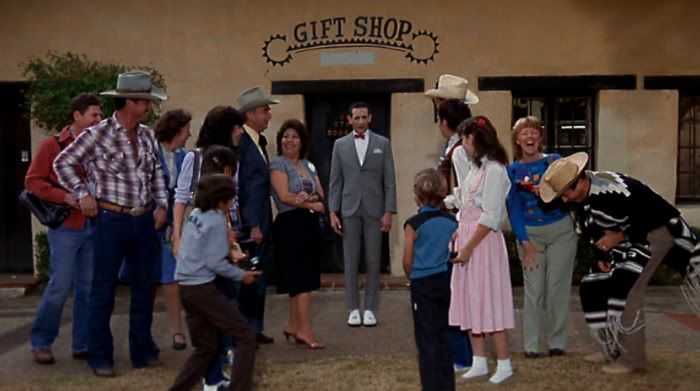 |
| There's no Publishing at the Alamo! |
Have you ever had the thought, "Hey, I think I'll write something and just get that published and, you know, just have a published book out there. That would be cool."
I had that thought once. I was young. Eisenhower was in office, I believe.
Well, after having that thought, and writing a book, and another, and another, and after finally getting an agent to take me on, I'm now ... out on submission!
This is next level, people. I've had my manuscript in the hands of many agents in the business. It's really gotten around. Don't judge! But it finally found it's way into the hands of the right agent, and now she is working to get it into the hands of the right editors at the right publishing houses. And after a month, I've learned it's currently in the hands of 11 editors. I've never been on submission before, but that sounds pretty great to me. Especially since I didn't have to personally beg and whine to get any of them to take it. I'd gotten quite proficient at that during the querying process, but it's still a chore.
I don't actually know how many editors were contacted during the past month to know if 11 is a good response rate or not. I suppose if 1,000 editors were approached, I should probably be pretty abashed about the result. If it went out to 10 and 11 requested then I could probably get a little cocky at this point. It's probably better I don't know.
In theory, my book is currently in line to be read by 11 individuals holding actual positions within publishing companies with the authority to make me an offer on my book and ultimately get it into print (on paper, digital, skywritten, whatever that means these days). It's very exciting and also terrifying. The longer I don't hear anything, the more self-doubt creeps in. Is it possible for me to actually hear them laughing at me from so many miles away? Agents were always very considerate and kind in their rejection of my work. Are editors of a similar ilk? If many of them are in New York, I've heard talk of these "New York Values" somewhere. Do these values include a healthy respect for ego coddling of amateur authors?
Hopefully these editors who showed an initial interest in my work won't laugh me right out of the business before I even get a chance to get into it.
I've come this far. Surely there's a basement in this Alamo with the shiny red bike of a book deal waiting for me!
Monday, January 4, 2016
This Will Be A Day Long Remembered ...
 |
| The Offer of Representation constitutes a binding magical contract! |
After a week of patiently waiting (that was funny to type!) for any other agents to come to their senses and offer to represent me, it was time to let my pseudo-agent know that I was all hers! I think I let her know in a less creepy way than that, but, basically, all roadblocks were lifted. Truthfully, I was all in the week before, regardless of what anyone else was willing to offer at that point. I'm a big believer in loyalty. I was ready to sign on with the agent that had seen the potential in my work and had already gone through a couple of rewrites to help make it shine. And that agent was Laura Zats with Red Sofa Literary.
When I emailed Laura she offered to put my contract in the mail. Imagining how uncomfortable it would be sleeping down at the curb under my mailbox the number of days it would take to receive the parcel, I kindly asked if the contract could be emailed. By the end of the day I had it in hand. That elusive contract I'd worked so many year (yes, you read that right ... years!) to procure was finally mine. Mine all mine. Wahhha wahhaa wahha ha ha ha.
Having already done my research on what to expect and not to expect in one of these agreements, everything appeared to be in good order so I put pen to paper and became a represented agent with Red Sofa Literary. As soon as the ink dried the sky opened up and everything changed. Birds sang a little more on key, sugar tasted just a little bit sweeter, blues were bluer, reds were ...
Actually, nothing at all happened. Anticlimactic, yes? But that's something I've learned in this process. Some things take so long to happen, you actually become desensitized by their not happening! Don't get me wrong, it was still an amazing moment and a monumental step, but it mostly just highlighted the next step. And the one after that, and so on. Getting published is a process. A painstakingly slow process.
Now that I had an agent, there were going to be ... that's right ... more rewrites. And more rewrites there were. And should I be fortunate enough to have my manuscript picked up by a publisher, guess what they will want from me. A lollipop? No, silly. More rewrites. Turns out, you don't write a book. You write a book about a thousand times. But with contract in hand and a talented and determined agent working on my behalf, maybe sometime this year I'll have the privilege of rewriting my manuscript yet again with the guidance of an editor at the publishing house that has bought my book.
Happy New Year everybody!
Thursday, December 31, 2015
Goodreads Review of Ready Player One
 Ready Player One by Ernest Cline
My rating: 4 of 5 stars
An enjoyable book and a must read for fans of the 1980's. This is Charlie and the Chocolate Factory meets the Goldbergs. 80's nostalgia is riding high at the moment. The characters were very likable if not wildly fleshed out. The overall plot was compelling. The main character of the book is ... the 1980's, especially the video games. If that was your thing, this will be an amazing read. I will say, hopefully without sounding sexist or something, but this book definitely felt like it was written by a dude. And I'm a dude saying this. There were just lots of opportunities where feelings and emotions and stuff could have been expounded on a little and the result would have been a more immersive reading experience. In some ways, diving into the book was a bit like being in the OASIS (it's like the Matrix). It was enjoyable, but lacked a certain multi-dimensional quality. Still, a fun read and I'm very interested to see what the movie looks like.!
View all my reviews
Tuesday, December 22, 2015
Sweating the Small Stuff
 |
| But how many votes does it take to make a quorum in the Senate? |
We take a brief pause in our "How I Got An Agent Series" to discuss this.
Star Wars!
This blog entry will be my spoiler free review ... eh, that's not quite right. Spoiler free, yes, but more my personal musings on the experience of seeing the most hyped movie of all time. I mean, really, it is, isn't it?
Full disclosure, I'm a major Star Wars nerd. People closest to me know this all too well. Most strangers seem even able to pick up on this despite the fact that I don't go around in Jedi robes trying to explain away the different kinds of hands (flippers, hooves) on Ponda Baba in the cantina scene of A New Hope.
But that aside, I do love me some Star Wars. I was indoctrinated into the series at a young age, much like a militarized clone trooper, and have never looked back. My interest and appreciation of the various movies have changed and morphed as I've aged and I love the original three for all new reasons as an adult and dad as I did as a kid. And yes, my son loves them too. He wasn't so sure at first, but he enthusiastically confirmed it after a long, cold night spent sleeping on the ground in the backyard. It's all good!
All kidding aside, my son actually sees merit in the prequels. And I try to fake it for him. But, really, while die hard fans will find a way to espouse the virtues of Episodes 1 -3, everybody knows they pretty much blow. Take away their association with the three better movies, and Star Wars would never have been a big thing.
That's why Episode VII was and is such a big deal. That's why it's the most anticipated Star Wars movie ever. The series has been coasting by on goodwill for decades. And the original three were that good. But the goodwill was just about dried up. Even Uncle George recognized it, selling off the property and the farm (just not the ranch) to Disney while the getting was still good. Now I can enthusiastically say (without a night spent in the backyard). It's all good!
I was one of the nuts who saw The Force Awakens on Thursday night. The movie pulled me in immediately. It's sooooo Star Wars! The acting was excellent, the dialogue was excellent (ok, in those ways maybe it wasn't very Star Wars) but I loved the new characters. Yes, J.J. Abrams leaned heavily on what came before, but how could he get away with not? And there was at least equal measures of freshness as well. A great balance, a balance to the force that whiny chosen one Annie Skywalker never accomplished.
At the end of the movie I was left with a nagging feeling. Did I love it? Could I love it the way I did when I was so young, is that even possible anymore? I actually left that first showing a little disappointed. And that was inevitable. You can't live up to the hype this movie has experienced. And I realized, as a writer, I was over-analyzing the plot. Yes, I do that a lot. The big strokes were there, but I was worrying about the details. Some of the backstories, the political state of the galaxy at large. I felt I'd missed something. For a second, I actually longed for Uncle George's wooden exposition. I just need to know how this galaxy resolves trade route disputes!
So I let a few days pass. Thinking back, I realized I actually didn't remember what was in the opening crawl. I remembered most scenes, but very little of what was said in them. During the weekend, I picked up a couple of awesome books that included backstory and exposition on the state of things thirty years after the Endor Ewok Dance Party. I satiated my writer's need to understand the hows and the whys. I also came to understand why it wasn't included in the movie. It's great for a read but it would have greatly slowed down the movie, and I'm really happy they stuck close to the two hour mark. I never felt LOTR was well served by it's 74 hour running time.
On Monday, I went back and had the Star Wars experience I'd been waiting for. I was able to be swept up in the excitement, the drama, the stakes. Everything was there and I was literally on the edge of my seat. Star Wars was back! It's true. The rave reviews, the critical acclaim. All of it.
The force was calling to me all along. I just had to let it in!
Sunday, December 13, 2015
The Call
So, to make a long story short ... Too late!
On September 28th, I sent another nudge to the agent I'd first queried December 22nd. I had sent her my second set of revisions about a month earlier. I had nudged once in between. As it turns out, this agent is very busy, but she was also communicative and let me know when to expect a response and pretty much stuck to it when I was patient enough to let her. I decided to nudge a second time because my birthday was coming up in a few days and I'm a spoiled child angling for a special present ... a shiny new agent to hug and squeeze and call George!
The response was, "I have some notes and would love to talk."
Oh, joy! Oh, rapture! Oh, crap! Notes? Did I not deliver the witch's broom? Did my proton torpedo not perfectly penetrate the thermal exhaust port and (wait, this is getting weird). What do "notes" mean? More changes? Is "notes" code for, "I have a prepared speech I'd like to give you over the phone explaining the many reasons you are not fit to have your work published and why I will not be representing you."
Ok, that last thing seems a little unlikely (and sadistic). As it turns out, "notes" means, "I'm ready to talk to you in person, but if for some reason you are a lunatic, I may need a parachute to get out of your crazy plane." You see, having an agent take you on is a big decision not just for the author but also for the agent. If you write wonderfully but spread your bread with a big ole' helping of nutty peanut butter, then you might not be the best person to essentially go into business with.
On the day of the scheduled call, my agent phoned right on time (isn't that lovely?) Introductions were made, basic biography type data was exchanged. Yes, we spoke of the weather, but only briefly. We do live in dramatically different climates. For about an hour, we basically had a normal, human-to-human conversation. We spoke primarily about the business, the marketplace, and trends. Most importantly, we talked about my expectations and what I wanted my career as an author to be like. We did not speak too much about the book. The fact that the call happened at all was evidence she liked the book. The purpose of the call was to make sure we liked each other.
And on that phone call it became official. I had an agent.
Almost.
There was the issue of letting other agents with my work know I had an offer of representation. So I had an agent, but it was kind of a secret and not really official. Yes, I'm learning that's what this whole getting published process is like: standing on an iced-over ledge in slick-soled shoes trying to grab wet marbles being dropped from another ledge just above you.
So the next week was weird. But we'll talk about that, well, next week. See you then!
Subscribe to:
Posts (Atom)